5 HIIT Formats That Fit an Actual 30-Minute Lunch Break
Quick Answer: With a genuine 30-minute window, you get about 14 to 16 minutes of actual training once you account for changing and cooling down. That is enough for real intervals if the format is chosen for low equipment needs, low sweat output, and a short warm-up. Below are five formats built around that constraint, each with the honest trade-off named.
The reason lunch workouts fail is almost never motivation. It is that people try to compress a 45-minute session into a 20-minute hole and give up when the maths does not work.

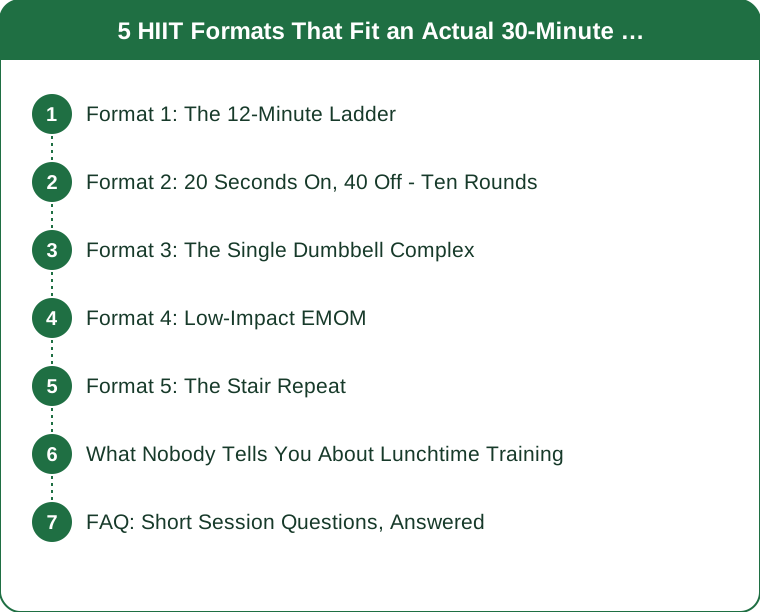
Format 1: The 12-Minute Ladder
Structure: One movement, descending reps, as fast as good form allows. Squats 12, push-ups 12, then 11 and 11, then 10 and 10, all the way down to 1. Rest only as needed.
Why it works in this window: There is no clock to manage and no equipment at all, so setup is zero. The descending reps mean the hardest sets come when you are freshest, and the final rounds go quickly - which means it finishes on a psychological upswing rather than a grind.
Most people complete the full ladder in 10 to 13 minutes. If you are faster, add a third movement - reverse lunges work well because they let the upper body recover.
The honest trade-off: The intensity is self-regulated, which means on a bad day you will drift. If you want a guaranteed stimulus, use one of the clocked formats below instead. This one is best on days when the goal is to move rather than to hit a specific target.
Sweat management: Moderate. Roughly a 7 out of 10 on the will-I-need-a-shower scale. Slowing the tempo deliberately in the last three rounds brings it down considerably without much cost to the training effect.
Format 2: 20 Seconds On, 40 Off - Ten Rounds
Structure: Ten rounds of 20 seconds of maximum-effort work and 40 seconds of complete rest. Total: 10 minutes. Use one movement or alternate two.
Why it works in this window: The 1:2 work-to-rest ratio is unusually generous for HIIT, and that is deliberate. Long rest means each 20-second effort can be genuinely hard, which is where the adaptation comes from - and it also means you sweat less overall than a session with short rests, because you spend two-thirds of it recovering.
Good movement choices: high knees, jump squats, mountain climbers, or a stationary bike if you have access to one. The bike version is the lowest-sweat option in this whole article.
The honest trade-off: Ten minutes of this is genuinely uncomfortable if you do it correctly, and doing it correctly is the entire point. Half effort in the work intervals turns it into a mediocre 10 minutes.
Sweat management: Lower than expected, around a 5 out of 10, because of the long rests. This is the format to choose when you have a meeting at 1pm.
Format 3: The Single Dumbbell Complex
Structure: One moderate dumbbell or kettlebell. Five movements, five reps each, no putting the weight down: goblet squat, single-arm row, reverse lunge, overhead press, deadlift. That is one round. Rest 60 seconds. Four to six rounds.
Why it works in this window: Complexes deliver a strength stimulus and a cardiovascular one at the same time, which is the most efficient use of a short window if you only train a few times a week. The single piece of equipment means no setup and no waiting for anything.
Weight selection matters more than usual - pick a load you could press for 12 reps fresh, because the press is the weak link and it comes fourth.
The honest trade-off: It requires equipment, which rules it out for a desk-side workout. And the technical demand is higher than the other formats here, so it is a poor choice if you are rushing or distracted.
Sweat management: High, an 8 out of 10. Complexes are deceptively taxing. Budget for a proper cool-down or pick a different format.

Format 4: Low-Impact EMOM
Structure: Every Minute On the Minute for 12 minutes. Odd minutes: 15 reverse lunges, alternating. Even minutes: 12 incline push-ups against a desk or wall. Rest for whatever remains of each minute.
Why it works in this window: No jumping, so no noise and no impact - this is the one that works in an apartment, a hotel room, or a quiet office corner. The EMOM structure means the clock manages the session for you, and finishing is a matter of surviving twelve minutes rather than counting rounds.
The self-adjusting quality is useful: if you finish the reps in 35 seconds you get 25 seconds of rest; if you slow down, you get less. The session automatically becomes appropriately hard.
The honest trade-off: Lower peak intensity than the interval formats. It builds work capacity and gets you moving, but it is not maximal-effort training and should not be sold as such.
Sweat management: Low, a 4 out of 10. The best option on this list for a workout followed immediately by other people.
Format 5: The Stair Repeat
Structure: Find a flight of stairs. Walk or jog up briskly, walk down as recovery. Repeat for 12 minutes. Aim for the same number of flights in the second half as the first.
Why it works in this window: Stairs are the highest-quality cardio equipment most people already have free access to, and the descent is a natural, self-enforced rest interval. There is no format to remember and no equipment to fetch.
The uphill work is also concentric-dominant, which means less muscle damage and less next-day soreness than a session with lots of jumping - a real advantage when you are training at midday and would rather not be limping through the afternoon.
The honest trade-off: You need stairs and you need to not care about being seen in a stairwell. Also worth knowing that the descent, not the climb, is where knees complain - walk down deliberately rather than trotting.
Sweat management: Depends entirely on pace, which makes it the most controllable option here. Walking briskly is a 4; running is a 9. Pick your setting based on the afternoon.
What Nobody Tells You About Lunchtime Training
The cool-down is not optional here, it is the whole trick. The reason people arrive back at their desk sweating for twenty minutes is that they stopped abruptly. Three to four minutes of easy walking at the end lets your core temperature start falling before you get dressed, and it cuts post-session sweating dramatically. Skipping it to save four minutes costs you fifteen.
Finish before you are done. The single most useful habit for lunch training is stopping one round earlier than you could. It preserves the afternoon, keeps the session something you look forward to, and over a month produces far more completed workouts than a maximal approach that you dread by Wednesday.
Eating afterward beats eating before. A short intense session on a mostly empty stomach is fine for most people. Trying it 20 minutes after a sandwich is not. Move first, eat at your desk after - it also removes the queue from your available time.
Dry shampoo and a change of top do more than a shower. For everything except the highest-sweat formats, a cool-down plus a wipe-down plus a fresh top is genuinely adequate. Building the session around not needing a shower is what makes 30 minutes possible at all.
Three of these a week beats one perfect one. Twelve minutes of real intervals three times a week is meaningful training. The instinct to wait until you have a proper hour is what keeps most people at zero.
FAQ: Short Session Questions, Answered
Is 12 minutes really enough to do anything?
For cardiovascular fitness, yes - the research on short high-intensity protocols is consistent that meaningful improvements come from very small total volumes when the intensity is genuinely high. For strength and muscle growth it is thinner, which is why the dumbbell complex is on this list.
Do I need to warm up if the session is this short?
Yes, but briefly. Two to three minutes of progressively faster movement - marching, arm circles, bodyweight squats - is enough. The one situation where you need more is the first cool weeks of the year, when tissue starts colder.
Which format should I pick if I only pick one?
The 20-on-40-off intervals. Best ratio of stimulus to sweat, no equipment, no technique risk, and the clock does the work of holding you accountable.
Will I crash in the afternoon?
Usually the opposite - most people report better afternoon focus, and there is reasonable evidence for a post-exercise cognitive benefit. If you do crash, the likely causes are going too hard, not eating afterward, or under-hydrating. Fix those before abandoning the idea.
TL;DR:
- A real 30-minute break leaves 12 to 16 minutes of training once changing and cooling down are accounted for. Plan for that number, not for 30.
- Five formats that fit: descending ladder, 20-on-40-off intervals, single-dumbbell complex, low-impact EMOM, and stair repeats.
- Match the format to the afternoon. Long rests and low impact mean less sweat, which is the actual constraint.
- Always cool down for three to four minutes. It is what makes the no-shower version work.
- Stop one round short of your limit. Consistency beats maximal effort at lunchtime.
Pick one, put it in the calendar for tomorrow, and stop waiting for the hour that is not coming.
Keep Reading
This article is for general informational and styling purposes only. Fit, sizing, and product availability may vary.