5 HIIT Interval Formats and Exactly When to Use Each One
Quick Answer: Tabata (20s on/10s off) suits max-intensity short bursts; EMOM (work starts every minute) builds pacing discipline; AMRAP (as many rounds as possible in a set time) tests conditioning under fatigue; classic HIIT intervals (30-60s work/rest) balance intensity and volume; descending ladders build mental toughness through increasing difficulty. Picking the wrong format for your actual goal is why some HIIT sessions feel unproductive despite real effort.
HIIT isn’t a single workout style — it’s an umbrella covering several distinct interval formats, each suited to a different training goal. Using Tabata when you actually need steady conditioning work (or vice versa) is a common reason results feel inconsistent.

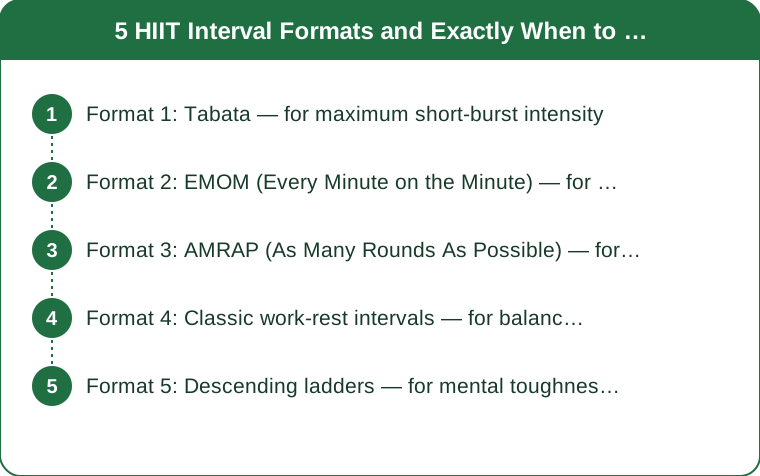
Format 1: Tabata — for maximum short-burst intensity
20 seconds of true maximum effort, 10 seconds rest, repeated 8 times (4 minutes total). Tabata is brutally short by design — the format only works if the 20-second bursts are genuinely all-out, not a paced effort. Best suited for simple, single movements (squat jumps, burpees) rather than complex exercises where form breaks down at max speed.
Format 2: EMOM (Every Minute on the Minute) — for pacing discipline
Perform a set number of reps at the start of every minute, resting for whatever time remains. EMOM’s real value is teaching pacing — go too fast early and your remaining rest shrinks each round; go too slow and you’re rushing to finish before the next minute starts. It builds a specific skill: sustainable effort under a ticking clock.

Format 3: AMRAP (As Many Rounds As Possible) — for conditioning under fatigue
Complete as many rounds of a set circuit as possible within a fixed time (often 10-20 minutes). AMRAP tests how well you maintain form and pace as fatigue accumulates — it’s less about single-effort intensity and more about sustained output, making it well-suited for general conditioning and mental toughness goals.
Format 4: Classic work-rest intervals — for balanced intensity and volume
30-60 seconds of hard effort, followed by 30-60 seconds rest, repeated for 15-25 minutes total. This is the most flexible, beginner-friendly HIIT format, since the longer rest periods (compared to Tabata) allow more complex movements and better form retention across a session, without demanding the max-effort discipline of Tabata.
Format 5: Descending ladders — for mental toughness and variety
Start with a longer work interval that shortens each round (e.g., 60s, 45s, 30s, 15s work, with equal or shorter rest), often finishing at near-max intensity when fatigue is already highest. This format specifically trains pushing through accumulated fatigue, which the other formats don’t emphasize in the same way.
Which format is actually best for fat loss specifically?
All five create a real metabolic demand; classic work-rest intervals and AMRAP tend to allow the most total training volume per session, which matters more for fat loss over time than which specific format is used.
Can beginners jump straight into Tabata?
It’s generally better to start with classic work-rest intervals or EMOM first — Tabata’s all-out demand is easier to execute safely once basic movement patterns and pacing sense are already established.
How many HIIT sessions a week should include these formats?
Most people do well with 2-3 HIIT sessions weekly, rotating formats rather than repeating the same one every time, which also helps prevent the staleness that comes from doing identical workouts on repeat.
TL;DR:
- Tabata: true max intensity, very short bursts, best for simple single movements
- EMOM: builds pacing discipline against a ticking clock
- AMRAP: tests sustained conditioning as fatigue accumulates
- Classic work-rest intervals: most beginner-friendly, balances intensity with volume
- Descending ladders: trains pushing through fatigue at the point you’re most tired
Keep Reading
This article is for general informational and styling purposes only. Fit, sizing, and product availability may vary.