5 HIIT Interval Formats Worth Trying Beyond the Standard 30-Seconds-On, 30-Off
Quick Answer: Rotating between Tabata (20 on/10 off), EMOM, pyramid intervals, 40/20 work-to-rest, and long-interval formats targets different energy systems and prevents the plateau that comes from running the same 30/30 format every session — each format below is suited to a different goal.
The 30-seconds-on, 30-seconds-off format became the default mostly because it’s easy to remember, not because it’s the best fit for every training goal.

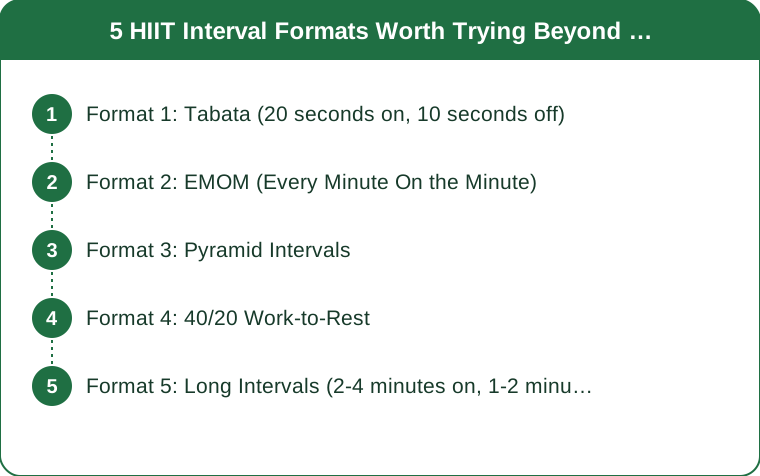
Format 1: Tabata (20 seconds on, 10 seconds off)
The original research-backed format, built around maximum effort in very short bursts. Best suited for short, intense sessions (typically 4-8 rounds per exercise) when the goal is pushing near-max intensity rather than sustaining moderate effort over a longer set.
Format 2: EMOM (Every Minute On the Minute)
A set number of reps performed at the start of every minute, with remaining time as rest — as fitness improves, the workout gets easier because rest time increases, while a decline in fitness immediately shows up as less rest. This format naturally self-regulates intensity and works well for both strength-HIIT hybrids and cardio.

Format 3: Pyramid Intervals
Work periods increase then decrease (e.g., 20s-40s-60s-40s-20s) with matched rest. This format builds toward peak effort gradually rather than starting at maximum, which can suit people who find flat, repeated max-effort intervals mentally harder to sustain across a full session.
Format 4: 40/20 Work-to-Rest
A longer work window with proportionally less rest than Tabata, better suited for building work capacity and moderate-to-high intensity sustained over a slightly longer stretch, rather than pure max-effort bursts.
Format 5: Long Intervals (2-4 minutes on, 1-2 minutes off)
Less common in typical HIIT content but valuable for building the ability to sustain hard effort over longer stretches — useful for anyone training toward events or activities that require more than short bursts of intensity.
TL;DR:
- Tabata suits short, true max-effort bursts
- EMOM self-regulates intensity based on current fitness level
- Pyramid intervals build toward peak effort gradually instead of starting there
- 40/20 builds work capacity over slightly longer sustained effort
- Long intervals train the ability to hold hard effort over multiple minutes
Rotating through a few of these across the week trains different capacities than defaulting to the same format every single time.
Keep Reading
This article is for general informational and styling purposes only. Fit, sizing, and product availability may vary.