EMOM, AMRAP and Tabata: The Interval Formats Decoded
Interval training’s alphabet — EMOM, AMRAP, Tabata — sounds like insider code and decodes into three simple clock structures, each with different superpowers. The format guide: how each works, what each is best at and the templates to program your own.

EMOM: Every Minute On the Minute
The structure: a set amount of work starts each minute — the remainder of the minute is rest (10 squats every minute for 10 minutes; fast work buys long rest, slow work buys short), the superpower (built-in pacing and rest discipline — the format that prevents both sandbagging and blowing up; the clock coaches), the best uses (strength-skill practice at quality — the pull-up project’s grease-the-groove in clock form; the manageable-intensity conditioning for beginners; the multi-movement rotations — minute one squats, minute two push-ups, minute three rows), and the template (pick 1-3 movements, reps completable in 30-40 seconds, run 10-20 minutes — the self-programming that scales by rep count).
AMRAP: As Many Rounds As Possible
The structure: a fixed time cap, a circuit repeated for maximum rounds (12 minutes of: 10 lunges, 10 rows, 10 sit-ups — count the rounds), the superpower (self-scaling intensity — everyone works at their own pace against the same clock; the group-workout equalizer and the progress benchmark: the same AMRAP retested monthly is a fitness scoreboard), the honest hazard (the format invites form decay under the clock — the quality-first rule that reps that degrade don’t count; the pace that survives the whole cap beats the sprint-and-crawl), and the template (3-4 movements, 8-12 reps each, 10-15 minute caps — logged for the retest).

Tabata: The Famous Four Minutes
The structure: 20 seconds maximal work, 10 seconds rest, ×8 rounds — four minutes total (the protocol from the original lab study), the honesty chapter (true Tabata is BRUTAL — the original was near-maximal efforts by athletes; the four-minutes-to-fitness marketing sells the timing without the intensity; most ‘Tabata’ classes are 20-10 intervals at moderate effort, which is fine and isn’t the study), the best uses (the single-modality burners — bike sprints, squat jumps, the stair version; one movement, honest effort, done; the finisher slot after strength), and the template (one big movement, all-out intent, respect the four minutes — and the recovery math from the frequency chapter at maximum relevance; true Tabata is a once-or-twice-weekly spice).
The Programming Layer
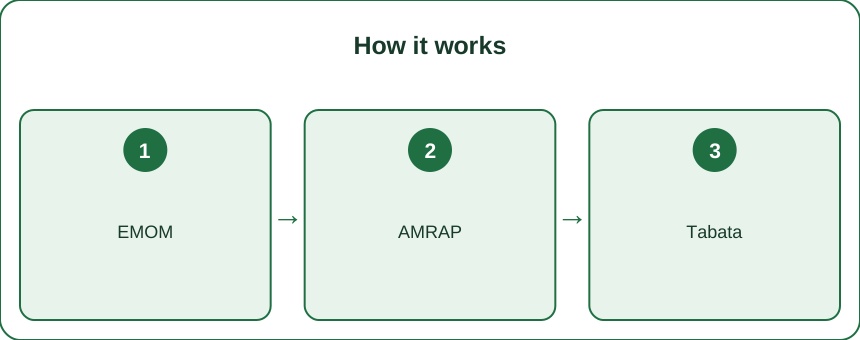
Using the alphabet: the format-to-goal map (EMOM for skill-and-pacing, AMRAP for benchmarks-and-density, Tabata for the short brutal finisher — the week that rotates formats stays fresh), the combination sessions (the EMOM strength block into the AMRAP conditioning block — the self-programmed class), the scaling universals (every format scales by movement choice, reps and effort — the low-impact library slots into all three; the quiet-workout and beginner tiers fully served), the equipment note (all three run on bodyweight alone — the formats are clocks, not gear), and the why-formats-work truth (structure defeats the wandering workout — the clock decides so you just work; the decision-fatigue answer in interval form; the same reason the dance playlist and the C25K app work — external structure carries effort further than willpower does). Three clocks, one alphabet: programmed.
EMOM paces, AMRAP benchmarks, Tabata is honestly brutal. The interval alphabet is three clock structures — pick by goal, scale by movement, let the clock coach.
Keep Reading
This article is for general informational and styling purposes only. Fit, sizing, and product availability may vary.