What Actually Happens (and Should Happen) Between Your HIIT Rounds
Quick Answer: Rest periods between HIIT rounds should typically match or slightly exceed the work interval (a 30-second sprint gets 30-45 seconds rest) for beginners, while more advanced HIIT protocols use shorter rest to intentionally push into a higher training-effect zone.
Most people treat HIIT rest periods as dead time, but the length and structure of that rest actually determines what kind of fitness adaptation you’re training for.

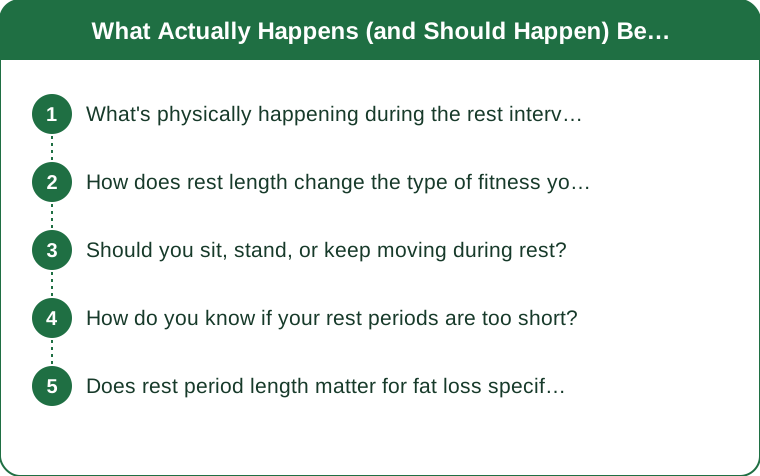
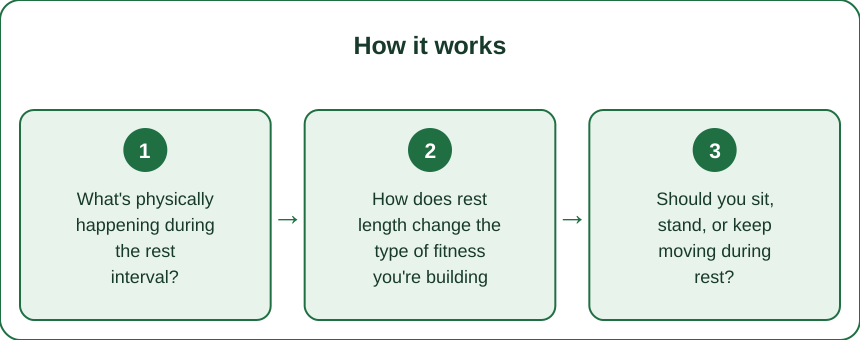
What’s physically happening during the rest interval?
During rest, your body works to clear lactate buildup and partially replenish the ATP-PC energy system that fueled the high-intensity effort. This process is only partially complete within typical HIIT rest windows, which is intentional — full recovery would defeat the purpose of interval training.
How does rest length change the type of fitness you’re building
Longer rest periods (1:1 or higher work-to-rest ratio) favor power and max-effort output each round, since you’re closer to fully recovered. Shorter rest (2:1 work-to-rest, harder effort with less recovery) builds more metabolic conditioning and lactate tolerance, which is a different, tougher training stimulus.

Should you sit, stand, or keep moving during rest?
Active rest — light movement like marching in place — clears lactate faster than sitting completely still, which can actually make the next round feel harder due to blood pooling in the legs. Full stillness is rarely the better choice unless you’re near exhaustion.
How do you know if your rest periods are too short?
If your form noticeably breaks down or your heart rate isn’t dropping at all between rounds, your rest is likely too short for your current fitness level. HIIT should be hard but controlled — form breakdown from inadequate rest increases injury risk without adding fitness benefit.
Does rest period length matter for fat loss specifically?
The often-cited “afterburn effect” (EPOC) is influenced more by overall workout intensity than by the specific rest length within reasonable ranges. Shorter rest can increase total calorie burn during the session, but it’s not a dramatically different fat-loss lever compared to workout intensity and consistency overall.
TL;DR:
- Beginners should generally rest as long as (or slightly longer than) the work interval
- Shorter rest builds more metabolic conditioning; longer rest supports higher power output each round
- Active rest (light movement) clears fatigue faster than sitting still
- Broken form or a heart rate that won’t drop between rounds signals your rest is too short
Next HIIT session, try adjusting just your rest length by 10-15 seconds and notice how differently the workout feels.
Keep Reading
This article is for general informational and styling purposes only. Fit, sizing, and product availability may vary.