How Many HIIT Recovery Days You Actually Need (Most People Take Too Few)
Quick Answer: Most people need at least 1-2 full rest or active-recovery days between HIIT sessions, doing HIIT no more than 2-3 times per week total. HIIT’s high intensity creates more cumulative fatigue and injury risk than its short duration suggests, making daily HIIT counterproductive for most people.
HIIT’s short session length (often 20-30 minutes) makes it tempting to treat like a daily habit, but the actual physiological recovery demand is closer to heavy strength training than to a light daily cardio session.

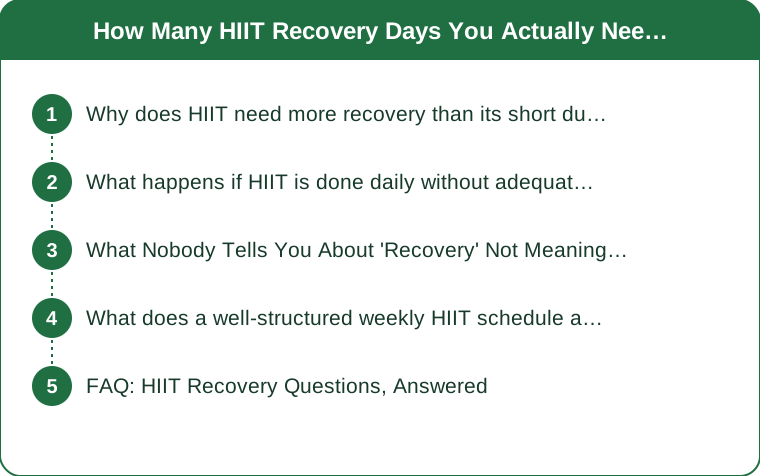
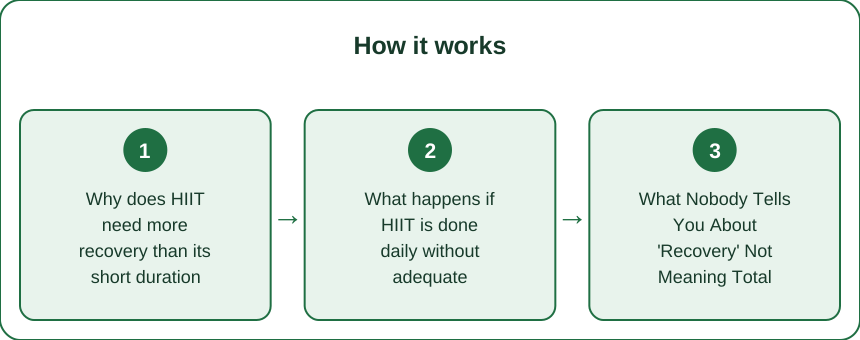
Why does HIIT need more recovery than its short duration suggests?
HIIT sessions push heart rate and muscular effort to near-maximal levels repeatedly within a single workout, creating significant cumulative fatigue in both the cardiovascular and muscular systems — the short total time doesn’t reduce this intensity-driven fatigue the way it might with a longer, lower-intensity cardio session.
This intensity also means HIIT creates more microtrauma and nervous system fatigue than steady, moderate cardio, both of which need real recovery time to adapt and rebuild rather than compound into overtraining.
What happens if HIIT is done daily without adequate recovery?
Daily high-intensity training without recovery is strongly linked to overtraining symptoms: persistent fatigue, declining performance despite consistent effort, disrupted sleep, and elevated injury risk from movement quality degrading under accumulated fatigue.
Paradoxically, more frequent HIIT without recovery often produces worse results than a properly spaced 2-3x weekly schedule, since the body never gets the recovery window needed to actually adapt to the training stimulus.

What Nobody Tells You About ‘Recovery’ Not Meaning Total Inactivity
Here’s the part that trips people up: recovery days don’t have to mean doing nothing — light walking, gentle yoga, or easy steady-state cardio on non-HIIT days actively supports recovery through increased blood flow, without adding the high-intensity stress that needs the actual rest.
Many people either do HIIT too frequently or swing to complete inactivity on off days — active recovery in between is generally the better middle path for both fitness progress and how ready you feel for the next hard session.
What does a well-structured weekly HIIT schedule actually look like?
- 2-3 HIIT sessions per week, spaced with at least one recovery day between each
- Active recovery (walking, light yoga, easy cycling) on non-HIIT days rather than total inactivity
- Strength training on separate days or well spaced from HIIT to avoid compounding fatigue on the same muscle groups
- One longer rest period weekly (a full day with minimal structured activity) to support fuller recovery
FAQ: HIIT Recovery Questions, Answered
Can I do HIIT on consecutive days if the workouts are short?
Not recommended for most people — intensity, not duration, is the main recovery-demanding factor, so back-to-back HIIT days significantly raise injury and overtraining risk.
Is 2 HIIT sessions per week enough to see real results?
Yes — research generally supports 2-3 weekly sessions as sufficient for meaningful cardiovascular and metabolic benefits, without needing daily frequency.
How do I know if I’m not recovering enough between HIIT sessions?
Watch for declining performance despite consistent effort, persistent soreness, poor sleep, or a sense of dread before sessions — all signs recovery time needs to increase.
TL;DR:
- Most people need 1-2 full or active-recovery days between HIIT sessions, capping at 2-3x weekly
- HIIT’s intensity creates more cumulative fatigue than its short duration suggests
- Daily HIIT without recovery often produces worse results through overtraining, not faster progress
- Active recovery (walking, easy cardio) on off days supports adaptation better than total inactivity
HIIT’s efficiency is in the intensity, not in how often you can repeat it — recovery days are where the actual adaptation happens.
Keep Reading
This article is for general informational and styling purposes only. Fit, sizing, and product availability may vary.