The HIIT Warning Sign That Shows Up in Your Mood Before Your Body
Overdoing HIIT tends to announce itself through mood and motivation dips well before any physical injury or measurable performance drop shows up. Missing that early signal is why a lot of recovery debt builds up unnoticed until it’s harder to reverse.

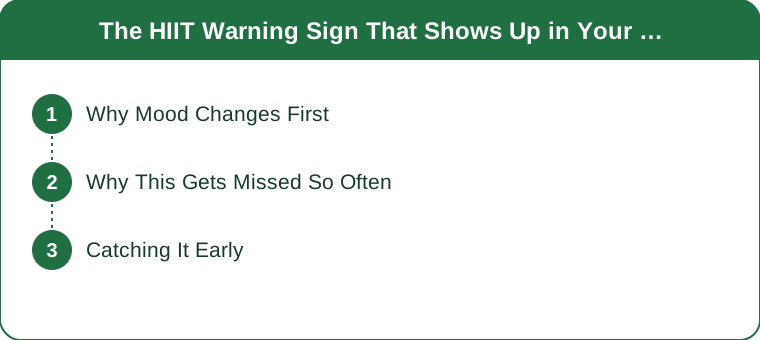
Why Mood Changes First
The physiological sequence: the the-nervous-system-signal-comes-first (accumulated high-intensity training stress affecting the nervous system’s regulation of mood and motivation before it shows up as measurable physical performance decline), the the-motivation-drop-is-data (a noticeable drop in motivation to start a normally enjoyed HIIT session being a legitimate physiological signal, not just a willpower or scheduling issue), the the-sleep-and-irritability-link (accumulated HIIT fatigue commonly showing up as disrupted sleep or increased irritability days before any drop in workout performance becomes measurable).

Why This Gets Missed So Often
The blind spot: the the-performance-lag-effect (physical performance metrics often staying stable for a while even as recovery debt builds, which is why relying only on performance tracking misses the early window), the the-mood-dismissed-as-unrelated (mood and motivation changes commonly getting attributed to unrelated life stress rather than connected back to training load, delaying the actual fix), the the-push-through-culture-factor (HIIT culture generally rewarding pushing through fatigue, which works against noticing and acting on early mood-based warning signs).
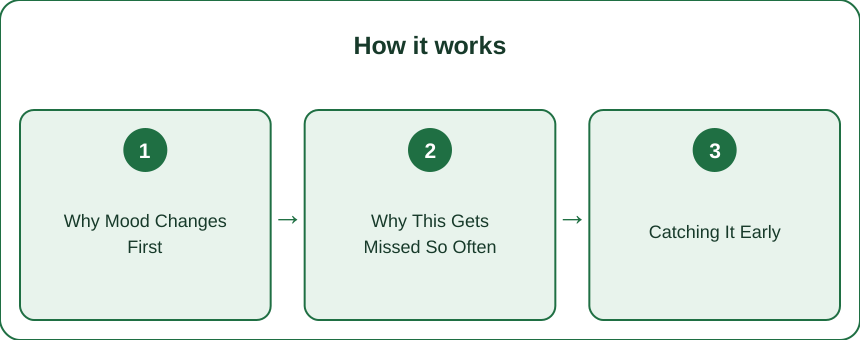
Catching It Early
The practical response: the the-track-mood-alongside-training (briefly logging motivation and mood alongside workout data making the early pattern far more visible than tracking performance alone), the the-planned-deload-response (a planned lower-intensity week as soon as mood-based signals appear being a much smaller intervention than waiting for a physical symptom or injury to force a break), and the frame (a drop in motivation for a normally enjoyed HIIT session is data worth acting on, not something to push past)).
Overdoing high-intensity interval training tends to announce itself through mood and motivation changes well before any physical injury or measurable performance decline shows up, because accumulated training stress affects nervous system regulation of mood before it shows up in output. A noticeable drop in motivation to start a normally enjoyed session, disrupted sleep, or increased irritability are legitimate physiological signals, not just scheduling excuses or unrelated life stress — but because performance metrics often stay stable for a while even as recovery debt builds, and HIIT culture generally rewards pushing through fatigue, these early signals get dismissed more often than they get acted on. Logging mood and motivation briefly alongside training data makes the pattern visible early enough to respond with a planned lower-intensity week, rather than waiting for an injury to force the break. The HIIT Warning Sign That Shows Up in Your Mood Before Your Body is worth tracking on purpose.
Keep Reading
This article is for general informational and styling purposes only. Fit, sizing, and product availability may vary.