The HIIT Recovery Debt That Builds Up Silently Before You Feel Any Warning Signs
HIIT’s intense, satisfying feeling of effort during and right after a session can mask a genuine recovery debt building up silently in the background across a training block, one that often doesn’t show obvious warning signs until it’s already fairly significant. Here is why it stays hidden and how to actually track it before it becomes a real problem.

Why This Matters More for HIIT Specifically Than for Steady-State Cardio
The comparison that clarifies the stakes: the steady-state-cardio-recovery-debt-tends-to-announce-itself-through-more-obvious-muscular-fatigue-that-hiits-neuromuscular-fatigue-often-doesnt (the recovery debt from steady-state cardio typically announcing itself through more straightforward, obvious muscular fatigue, while HIIT’s neuromuscular fatigue signature is genuinely less obvious by comparison, making this specific hidden-buildup pattern more relevant to HIIT than to lower-intensity steady cardio, per the hiit-vs-steady-state-cardio-guide logic — the recovery-debt-from-steady-state-cardio-typically-announcing-itself-through-more-straightforward-obvious-muscular-fatigue-while-hiits-neuromuscular-fatigue-signature-is-genuinely-less-obvious-by-comparison), and the frame (the comparison as clarifying why this specific hidden-buildup concern is more relevant to HIIT than to other training types — not because HIIT is inherently worse, but because its fatigue signature specifically hides more easily).

Why HIIT Recovery Debt Specifically Stays Hidden
The masking factors: the the-intensity-itself-produces-an-immediate-post-session-endorphin-lift-that-masks-accumulating-underlying-fatigue (the same intense effort that makes HIIT effective also producing a strong immediate post-session endorphin and mood lift, per the hiit-fat-loss-truth-guide logic, which can mask a genuinely accumulating underlying fatigue debt session after session — the the-same-intense-effort-producing-a-strong-immediate-post-session-endorphin-and-mood-lift-can-mask-a-genuinely-accumulating-underlying-fatigue-debt-session-after-session), the the-hiits-neuromuscular-and-central-nervous-system-fatigue-accumulates-differently-and-less-visibly-than-simple-muscular-soreness-does (the neuromuscular and central nervous system fatigue that high-intensity interval work specifically accumulates being genuinely less visible and less easily self-monitored than straightforward muscular soreness, per the hiit-recovery-between-intervals-guide logic — the neuromuscular-and-central-nervous-system-fatigue-that-high-intensity-work-specifically-accumulates-being-genuinely-less-visible-and-less-easily-self-monitored-than-straightforward-muscular-soreness), and the reframe (the hidden accumulation as a real, mechanism-based pattern specific to HIIT’s particular fatigue profile, not a sign of being unusually bad at noticing fatigue).
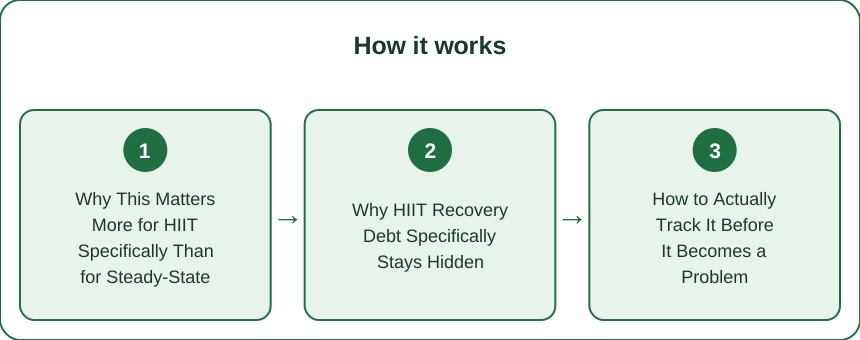
How to Actually Track It Before It Becomes a Problem
The practical monitoring: the track-session-performance-metrics-not-just-completion-since-performance-decline-often-precedes-subjective-symptom-awareness (the actually tracking objective session performance — interval pace, power output, reps completed — rather than only tracking whether a session got completed, since performance decline often shows up before subjective fatigue awareness catches up to it, per the hiit-frequency-recovery-guide logic — the actually-tracking-objective-session-performance-rather-than-only-whether-a-session-got-completed-catches-decline-that-often-shows-up-before-subjective-fatigue-awareness-does), the the-monitor-morning-resting-heart-rate-or-hrv-trend-specifically-during-a-heavier-hiit-block-as-an-early-objective-signal (the tracking a resting heart rate or heart rate variability trend specifically during a period of heavier HIIT training, since this objective signal can shift before subjective fatigue feels obviously different, per the hiit-recovery-days-guide logic — the tracking-a-resting-heart-rate-or-heart-rate-variability-trend-specifically-during-heavier-hiit-training-can-catch-a-shift-before-subjective-fatigue-feels-obviously-different), the the-schedule-deliberate-lower-intensity-or-full-rest-days-proactively-rather-than-only-reactively-once-symptoms-are-already-obvious (the building genuinely lower-intensity or full rest days into the schedule proactively based on training load rather than waiting for obvious symptoms to force a reactive break, per the low-impact-hiit-workout-guide logic — the building-genuinely-lower-intensity-or-full-rest-days-into-the-schedule-proactively-based-on-training-load-rather-than-waiting-for-obvious-symptoms-to-force-a-reactive-break), and the frame (the tracking approach as monitoring objective session performance rather than just completion, tracking resting heart rate or HRV trend as an early objective signal, and proactively scheduling lower-intensity days based on training load rather than waiting for obvious symptoms — catching the debt before it becomes a problem rather than after).
HIIT recovery debt can build silently because the same intense effort that makes the training effective also produces a strong immediate post-session endorphin lift that masks a genuinely accumulating underlying fatigue debt, and the neuromuscular and central nervous system fatigue that high-intensity work specifically accumulates is genuinely less visible and harder to self-monitor than straightforward muscular soreness. Catching it before it becomes a real problem means actually tracking objective session performance metrics like interval pace or power output rather than only whether a session got completed, since performance decline often shows up before subjective fatigue awareness catches up, monitoring resting heart rate or heart rate variability trend specifically during heavier HIIT training blocks as an early objective signal, and proactively scheduling genuinely lower-intensity or full rest days based on actual training load rather than waiting for obvious symptoms to force a reactive break.
Keep Reading
This article is for general informational and styling purposes only. Fit, sizing, and product availability may vary.