5 Tabata-Style HIIT Formats, Broken Down
Quick Answer: Tabata and its variations all use structured work-to-rest intervals, but the ratios and total time change the training effect significantly — classic Tabata is short and brutal, while longer-interval formats build different conditioning. Picking the right format for your goal matters more than just picking ‘HIIT’ generically.
All interval workouts get lumped under ‘HIIT,’ but a true 20/10 Tabata round and a 40/20 EMOM-style format ask very different things of your body.

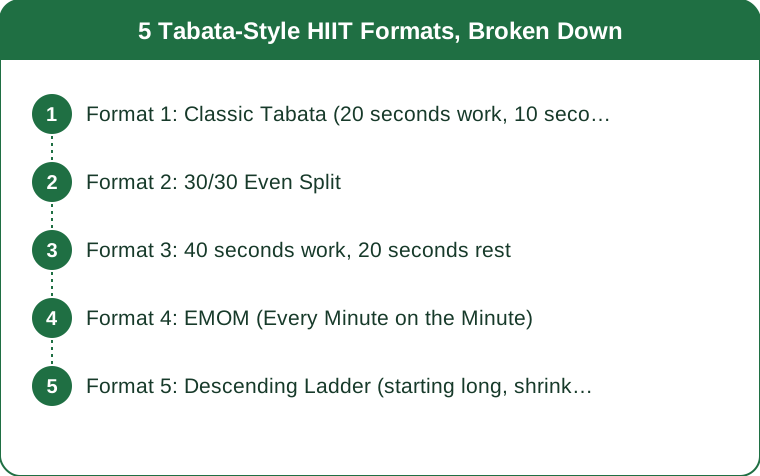
Format 1: Classic Tabata (20 seconds work, 10 seconds rest)
The original protocol, developed for elite speed skaters, cycles through 8 rounds of this ratio for a total of just 4 minutes per exercise block. The extremely short rest means near-maximal effort is required each round, making this format intense but very time-efficient. Best suited for: short, focused conditioning bursts when time is genuinely limited.
Format 2: 30/30 Even Split
Equal work and rest periods make this format more sustainable across a longer session, allowing more total rounds and exercise variety compared to classic Tabata’s brutal ratio. Best suited for: beginners to interval training or workouts targeting more total volume over intensity.

Format 3: 40 seconds work, 20 seconds rest
This ratio allows for slightly more sustained effort within each work period, useful for exercises that take a few seconds to build up to full intensity, like certain cardio movements. Best suited for: full-body circuit-style HIIT combining strength and cardio movements.
Format 4: EMOM (Every Minute on the Minute)
Rather than a fixed work-rest split, EMOM assigns a set number of reps to complete within each minute, with remaining time in that minute serving as rest — meaning your rest period shrinks as you fatigue and slow down. Best suited for: pacing practice and building the ability to sustain output under accumulating fatigue.
Format 5: Descending Ladder (starting long, shrinking work periods)
Work periods start longer (like 45 seconds) and shrink each round (40, 35, 30…) while rest stays constant, so relative intensity increases as the workout progresses even though total per-round effort decreases. Best suited for: building a mental habit of pushing harder as fatigue accumulates, rather than easing off.
TL;DR:
- Classic Tabata (20/10) is short, intense, and time-efficient
- Even 30/30 splits suit beginners and longer total volume
- 40/20 works well for full-body circuit-style training
- EMOM builds pacing skill as rest shrinks with fatigue
- Descending ladders train pushing harder as a session progresses
Matching the interval format to your actual goal gets more out of a HIIT session than defaulting to whichever ratio is most popular online.
Keep Reading
This article is for general informational and styling purposes only. Fit, sizing, and product availability may vary.