5 HIIT Formats That Work in a Thin-Walled Apartment (No Jumping)
Quick Answer: Swap jumping moves for tempo-based strength moves (slow squats, mountain climbers on hands, isometric holds) done at a fast pace with short rest — the intensity comes from tempo and minimal rest, not impact.
You don’t have to choose between a real workout and a good relationship with your downstairs neighbor. Jumping isn’t what makes HIIT effective — the short rest and sustained effort are. Here are five formats that prove it.

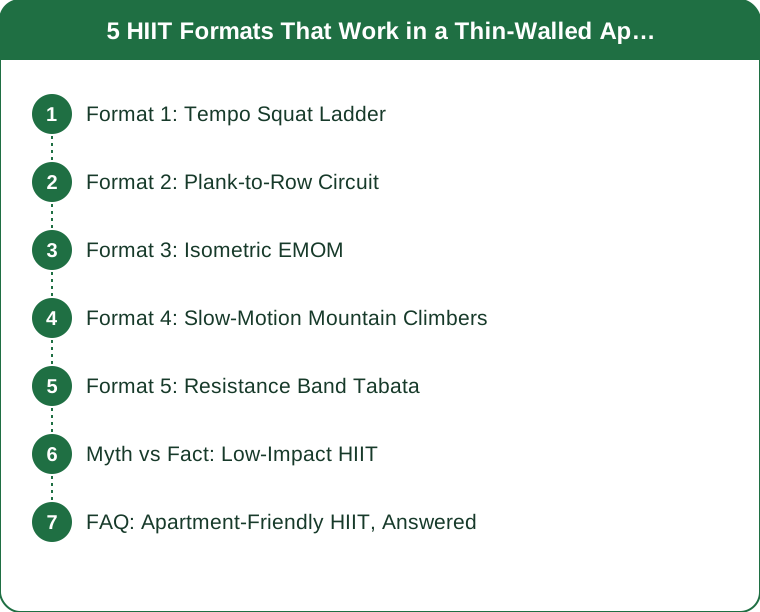
Format 1: Tempo Squat Ladder
Slow, controlled squats — 3 seconds down, 1 second up — for 40 seconds, then 20 seconds rest, repeated for 8 rounds. The slow eccentric keeps your heart rate high without a single footfall leaving the ground.
Format 2: Plank-to-Row Circuit
Alternate between a forearm plank hold and renegade rows (dumbbells or filled water bottles) for 40 seconds on, 20 seconds off, across 4 exercises. Everything stays low to the ground, so the loudest sound is your breathing.
Format 3: Isometric EMOM
Every minute, hold a different isometric position for 40 seconds — wall sit, plank, glute bridge hold, side plank — then rest the remaining 20 seconds. Six rounds covers a full-body burn in 6 minutes flat.

Format 4: Slow-Motion Mountain Climbers
Standard mountain climbers get loud fast. Slowing them to 1 knee-drive per second, hands planted wide for stability, keeps the movement silent while still spiking heart rate over a 45-second interval.
Format 5: Resistance Band Tabata
Classic Tabata timing (20 seconds work, 10 seconds rest, 8 rounds) applied to band rows, band squats, and band presses. The band provides the resistance that impact normally would, with zero floor contact.
Myth vs Fact: Low-Impact HIIT
Myth: Without jumping, it’s not really HIIT. Fact: HIIT is defined by the work-to-rest ratio and effort level, not by impact — tempo and isometric holds can push heart rate just as high.
Myth: Low-impact means low intensity. Fact: A well-timed low-impact circuit can hit the same heart rate zones as a jumping-based one; ask anyone who’s done a real isometric EMOM.
FAQ: Apartment-Friendly HIIT, Answered
Will these still help with fat loss?
Yes — fat loss responds to total energy expenditure and consistency, and these formats can burn a comparable amount to jumping-based HIIT when done at real effort.
How do I know if I’m working hard enough without jumping?
Use your breathing as the gauge: by the end of each 40-second interval, talking in full sentences should feel hard. If it doesn’t, shorten the rest or slow the tempo further.
Can I do these every day?
Most people do well with 3-4 sessions a week, with easier days or rest in between — daily high-intensity work tends to catch up with recovery regardless of impact level.
TL;DR:
- Tempo and short rest create intensity — impact isn’t required
- Try tempo squats, plank circuits, isometric EMOMs, slow mountain climbers, or band Tabata
- Judge effort by breathing, not by how loud the workout is
- 3-4 sessions a week is a solid starting frequency
No jumping needed — just controlled tempo and honest effort.
Keep Reading
This article is for general informational and styling purposes only. Fit, sizing, and product availability may vary.