HIIT for Beginners: How to Start Safely
HIIT — high-intensity interval training — is famously efficient and effective, delivering big fitness gains in short workouts. But because it’s intense, starting safely matters, especially as a beginner. Diving in too hard, too soon can lead to injury or burnout and put you off entirely. The good news is that HIIT is genuinely beginner-friendly when you ease in the right way. Here’s how to start HIIT safely and set yourself up to love it.

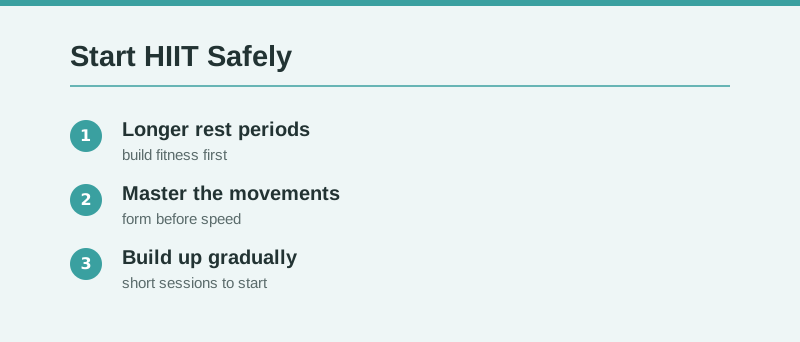
Start With Longer Rest Periods
As a beginner, give yourself more recovery between intervals than the hardcore ratios you might see online. Longer rests let you catch your breath, maintain good form, and complete the workout without falling apart. You might start with, say, 30 seconds of work and 30 or more seconds of rest, then gradually shorten the rests as your fitness improves. Building fitness safely first, with generous recovery, is far smarter than trying to match advanced ratios immediately.
Master the Movements First
Before adding speed or intensity, learn each exercise with good form using slower, controlled reps. Proper technique prevents injury and ensures you’re actually working the right muscles — and it’s much harder to maintain good form once you’re moving fast and fatigued. So master the basic movements first, then gradually add the intensity that makes HIIT effective. Quality of movement before speed is a principle that keeps you safe and gets you better results.

Build Up Gradually
Start with shorter HIIT sessions a couple of times a week, and build from there as your fitness and confidence grow. There’s no need to do long or daily HIIT sessions as a beginner — in fact, that’s a recipe for burnout, since HIIT is demanding and your body needs recovery between sessions. Giving your body time to adapt by starting small and progressing gradually keeps HIIT sustainable, safe, and genuinely enjoyable rather than overwhelming.
Always Warm Up and Cool Down
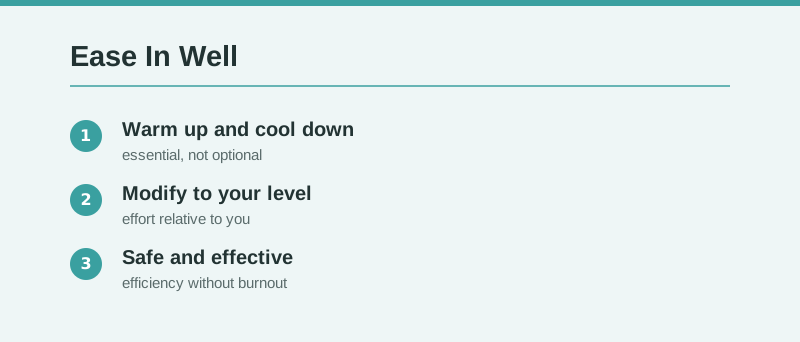
Because HIIT is intense, warming up beforehand is genuinely important — a few minutes of light movement to raise your heart rate and prepare your muscles significantly reduces your injury risk. Likewise, a short cool-down and some gentle stretching afterward help your body recover. Never skip these bookends; they’re not optional extras for HIIT but an essential part of doing it safely. Warming up and cooling down keeps you moving well, session after session.
Modify to Suit Your Level
HIIT is wonderfully scalable, so modify every exercise to suit your current fitness. Step out burpees instead of jumping, drop to your knees for push-ups, take extra rest whenever you need it — the goal is high effort relative to your own level, not matching anyone else. Listening to your body and modifying as needed keeps HIIT both safe and effective, and lets you build up at your own pace. Meet yourself where you are, and progress from there.
HIIT for beginners is about starting with longer rest periods, mastering the movements first, building up gradually, always warming up and cooling down, and modifying to suit your level. Ease in the right way and HIIT becomes a safe, effective, and genuinely enjoyable part of your routine. Start smart, listen to your body, and you’ll get all the efficiency of HIIT without the injury or burnout.
Keep Reading
This article is for general informational and styling purposes only. Fit, sizing, and product availability may vary.